
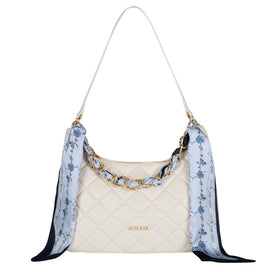
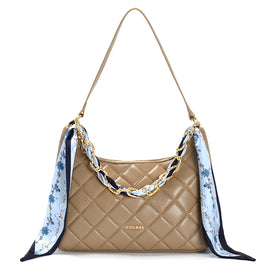
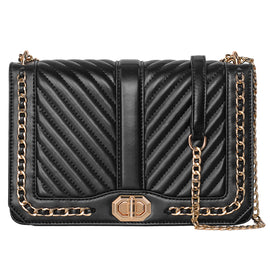
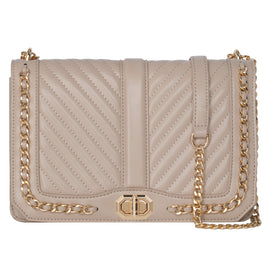


Top 5 China Bag Manufacturers
China has long been recognized as the global center for handbag manufacturing. From luxury leather goods to cost-efficient fashion bags, Chinese factories support brands across every market segment.
What makes China particularly competitive is its ability to balance cost efficiency, production scale, and technical craftsmanship. Over the years, several manufacturers have stood out by offering unique strengths in quality control, supply chain management, and innovation.
Below is a closer look at five leading bag manufacturers in China and what differentiates them in today’s competitive market.
1. HerminFashion – High-Precision Custom Bag Manufacturer

HerminFashion, based in Guangzhou, is widely regarded as a top-tier handbag manufacturer specializing in custom bag production for global brands.
One of its core advantages lies in its ability to achieve up to 95% design accuracy, helping brands turn creative concepts into highly consistent finished products. This level of precision is supported by strong internal processes and experienced technical teams.
In addition, HerminFashion is known for its mature cost control system, allowing clients to maintain product quality while optimizing margins. Its service team, with over 20 years of industry experience, provides professional guidance throughout development, sampling, and mass production.
This combination of precision, cost balance, and service makes HerminFashion a preferred partner for brands seeking reliable long-term manufacturing.
2. J.D. Handbag Factory – Flexible Production Strategy

J.D. Handbag Factory stands out for its adaptive production model, which is designed to match different project requirements.
Instead of relying on a single production base, JD evaluates four key factors before assigning production:
-
Target price
-
Quality requirements
-
Order quantity
-
Product complexity
Based on these variables, they allocate orders to different factories. For cost-sensitive products, production may be assigned to regions with lower labor and rental costs. For premium designs, they utilize facilities with more advanced craftsmanship capabilities.
This flexible approach allows JD to serve a wide range of clients, from budget-focused retailers to high-end brands.
3. Sunteam – Global Manufacturing Network

Sunteam operates a multi-country production and management system, making it one of the more internationally structured manufacturers in the industry.
Their model includes:
-
Production facilities in Bangladesh
-
Headquarters in China for daily operations
-
A quality control office in Italy
This three-region structure enables Sunteam to combine cost efficiency with international quality standards. With over 30 years of experience in PU bag manufacturing, the company has developed strong expertise in managing large-scale production across borders.
This setup is particularly appealing to brands seeking both competitive pricing and global quality assurance.
4. Senrong – Large-Scale Production Powerhouse

Guangzhou Senrong is known for its massive production capacity, making it one of the largest PU bag manufacturers in China.
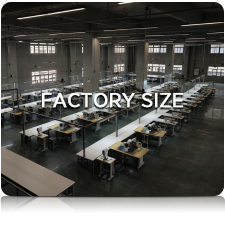
With factory spaces ranging from 14,000 to 26,000 square meters, Senrong is capable of producing up to 4.3 million bags per month. This scale allows them to efficiently handle large-volume orders for major clients.
Their customer base includes well-known companies such as Walmart, Pepsi, and IBM, which rely on Senrong’s ability to deliver consistent quality at scale.
For brands that require high-volume production with stable output, Senrong is a strong option.
5. Hongya – Material Innovation Specialist

Dongguan Hongya differentiates itself through its focus on material science and innovation.
Unlike traditional manufacturers that rely on external suppliers, Hongya develops its own leather materials, giving it greater control over product performance and consistency.
This capability allows the company to:
-
Experiment with new material compositions
-
Improve durability and texture
-
Reduce dependency on third-party suppliers
By combining manufacturing with material development, Hongya offers unique value to brands looking for innovation-driven product development.
Final Thoughts
Choosing the right handbag manufacturer in China depends on your brand’s priorities—whether that’s cost efficiency, production flexibility, large-scale capacity, or material innovation.
Each of the manufacturers listed above offers distinct strengths, reflecting the diversity and depth of China’s bag manufacturing industry. Understanding these differences can help brands make more informed sourcing decisions.
For businesses seeking a balance between quality, precision, and long-term collaboration, working with experienced manufacturers that provide transparent processes and strong technical support can make a significant difference.
FAQ – Bag Manufacturers in China
1. Why are Chinese bag manufacturers so competitive?
Chinese bag manufacturers are competitive due to their strong supply chains, skilled labor, and advanced production systems. They can balance quality and cost efficiently while handling both small and large orders, making them ideal for global brands.
2. How do I choose the right bag manufacturer in China?
You should evaluate factors such as product quality, communication, experience, MOQ, and pricing transparency. Request samples and compare multiple suppliers before making a final decision to ensure reliability.
3. What is the typical MOQ for custom handbags?
Most manufacturers require a minimum order quantity of 50–300 pieces per style. The exact MOQ depends on materials, design complexity, and production setup requirements.
4. How long does it take to produce custom bags?
Sampling usually takes 10–20 days, while bulk production requires around 30–45 days. Timelines may vary depending on order size, materials, and factory workload.
5. Why do different factories quote different prices for the same bag?
Price differences are often caused by variations in materials, craftsmanship, production scale, and quality standards. Lower prices may indicate cost-saving measures that affect durability or consistency.
6. Can manufacturers help improve my bag design?
Yes, experienced manufacturers can suggest better materials, simplify structures, and optimize production methods. This helps improve both product quality and cost efficiency.
