
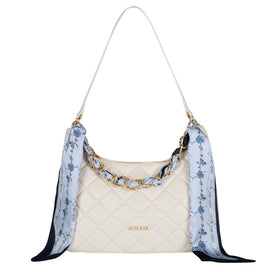
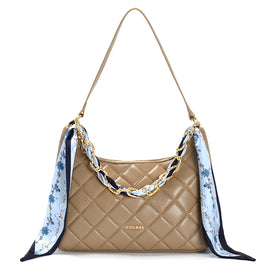
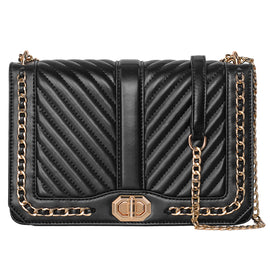
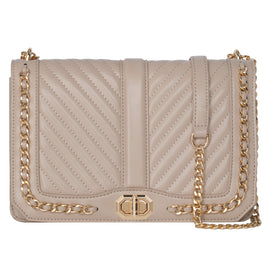


What Is Microfiber Leather? Properties, Uses, and Care
Microfiber leather has become increasingly common in handbags, footwear, automotive interiors, furniture and sporting goods. It is often promoted as a more advanced alternative to ordinary PU leather because it can offer a softer hand, a more leather-like structure and better resistance to repeated use.
However, the term is also widely misunderstood.
Microfiber leather is not genuine leather, and the word “microfiber” alone does not guarantee that a material is durable, environmentally responsible or suitable for a particular product. Two materials sold under the same name may perform very differently depending on their fiber structure, polyurethane chemistry, coating thickness and manufacturing process.
Interest in synthetic leather continues to grow across fashion, automotive and furnishing applications. One market forecast, updated in November 2025, estimated that the broader global synthetic leather market could increase from USD 71.93 billion in 2024 to USD 93.25 billion by 2029. Bags, purses and wallets are among the end-use categories included in this market.
For brands and product developers, the important question is therefore not simply, “Is this microfiber leather?” It is:
What type of microfiber leather is it, how has it been tested, and is it suitable for the way the finished product will actually be used?
This guide explains how microfiber leather is made, how it compares with standard PU and genuine leather, where it is commonly used, how to evaluate its quality and how to care for it properly.
What Is Microfiber Leather?
Microfiber leather is a type of synthetic leather made from an ultra-fine-fiber base combined with polyurethane, commonly abbreviated as PU.
A typical construction includes:
-
A nonwoven base made from very fine synthetic fibers
-
Polyurethane distributed through or around that fibrous structure
-
A surface coating, grain layer or finishing treatment
-
Color, texture and protective topcoat systems
The fibers may be polyester, polyamide such as nylon, or a combination of different polymers. In some constructions, bicomponent fibers are split or partially dissolved during processing to create much finer filaments.
Unlike an ordinary woven fabric, a microfiber nonwoven can form a dense, three-dimensional fiber network. This helps the material reproduce some of the structural characteristics associated with natural leather rather than merely copying its surface appearance.
A 2018 study on split microfiber synthetic leather used a nylon-and-polyester nonwoven base with a waterborne polyurethane coating. Microscopy found fiber diameters of approximately 2.2 to 5.5 micrometers in the tested construction. The study also demonstrated that the structure and coating process had measurable effects on air permeability, tensile strength, tear strength and peeling strength.
Commercial products do not all use the same formulation. For example, Toray lists one Ultrasuede grade as 75% polyester ultra-microfiber nonwoven and 25% non-fibrous polyurethane binder, while other microfiber leathers may use nylon-based fibers, different PU systems or a more substantial grain coating.
For that reason, microfiber leather is better understood as a family of engineered synthetic materials, not one standardized recipe.

Is Microfiber Leather Real Leather?
No. Microfiber leather is not real leather because it is not made from animal hide.
It belongs to the wider category of synthetic leather, artificial leather or leather-like coated materials. Depending on the product and market, it may also be described as:
-
Microfiber PU leather
-
Microfiber synthetic leather
-
Microfibre leather
-
Microfiber suede
-
Man-made leather
-
Vegan leather
-
Artificial leather
These terms are not always interchangeable. “Microfiber suede,” for example, may have a brushed, open surface without the distinct grain coating normally associated with smooth synthetic leather.
Microfiber leather should also not be confused with bonded leather. Bonded leather usually contains processed leather fibers held together with binders, whereas conventional microfiber leather is generally made from synthetic fibers and polyurethane.
Most microfiber leather is animal-free, but brands making vegan claims should still verify the complete formulation. Adhesives, dyes, coatings and processing aids may come from different suppliers, so a material name alone is not always enough to confirm every component in the finished product.
How Is Microfiber Leather Made?
The exact manufacturing process varies, but most microfiber synthetic leather is produced through several major stages.
1. Creating the Microfiber Base
The manufacturer first produces very fine synthetic fibers. These may be made through split-fiber, sea-island, bicomponent or other fiber-forming technologies.
The fibers are formed into a nonwoven sheet through needling, entanglement or related processes. The objective is to build a fibrous network with thickness, flexibility and internal structure rather than a simple flat textile backing.
2. Impregnating the Base With Polyurethane
Polyurethane is introduced into the nonwoven structure as a binder or matrix. It helps stabilize the fibers and influences the material’s softness, resilience, density and dimensional stability.
The PU does not simply sit on top in every construction. In higher-structure microfiber materials, polyurethane may be distributed throughout the base, creating an integrated fiber-and-polymer composite.
3. Developing Porosity and Hand Feel
Manufacturers may split, dissolve or separate parts of the original bicomponent fibers to create finer filaments and internal voids.
The size and distribution of these pores influence softness, flexibility, moisture transport and weight. Recent research on polyurethane synthetic leather emphasizes that water-vapor permeability depends heavily on the porous structure and hydrophilicity of the coating, not merely on whether the product is labeled “microfiber.”
4. Adding the Surface
For smooth or grained microfiber leather, a PU skin or coating may be applied using transfer coating, direct coating or other finishing methods.
The surface can then be:
-
Embossed
-
Printed
-
Dyed
-
Buffed
-
Polished
-
Matted
-
Made glossy
-
Given a protective topcoat
This allows manufacturers to reproduce pebble grain, crosshatch, saffiano-style textures, smooth calf-like surfaces, metallic effects and suede-like finishes.
5. Final Finishing and Inspection
The finished rolls are checked for color, thickness, width, surface defects, hand feel and physical performance.

Traditional PU synthetic leather production has often relied on solvent-based processing. Current research is increasingly focused on waterborne and solvent-free polyurethane systems intended to reduce solvent use and improve manufacturing conditions. A 2026 review of PU-based microfiber synthetic leather identifies waterborne and solvent-free systems as important areas of current development, while also noting that performance still depends on resin chemistry and processing design.
Waterborne does not automatically mean impact-free, however. The raw materials, energy demand, additives, durability and end-of-life treatment must still be considered.
Microfiber Leather vs. Standard PU Leather
Microfiber leather is usually PU-based, but ordinary PU leather is not necessarily microfiber leather.
Standard PU leather is often made by placing a polyurethane coating over a woven, knitted or conventional nonwoven textile backing. Its leather-like appearance may come mainly from the surface layer.
Microfiber leather normally uses a much finer and more integrated nonwoven base. This can provide:
-
A denser internal structure
-
Better tear propagation resistance
-
Improved softness and drape
-
More stable thickness
-
Greater resistance to repeated flexing
-
A surface that feels less dependent on a thick plastic-like coating
The distinction is not always obvious from the face of the material. A well-finished basic PU can look convincing in a small sample, while a poorly formulated microfiber leather can still fail prematurely.
The backing is only one part of the system. The following factors may be equally important:
-
Type of polyurethane
-
Thickness of the surface layer
-
Quality of the topcoat
-
Coating-to-base adhesion
-
Plasticizers and additives
-
Resistance to moisture and heat
-
Storage conditions
-
Compatibility with adhesives and edge paint
Microfiber leather should therefore not be treated as an automatic quality grade. It is a construction category whose quality must still be verified.
For a broader comparison of coated synthetic materials, see our guide to PU leather vs. PVC leather.
Key Properties of Microfiber Leather
Durability
A dense microfiber base can provide strong resistance to tearing and stretching. Because the fibers are distributed in multiple directions rather than arranged only as warp and weft yarns, damage may be less likely to travel along one obvious fabric direction.
In the 2018 split-microfiber study, the tested construction achieved better tensile, tear and peeling results than the comparison materials used by the researchers. This does not prove that every microfiber leather will outperform every natural or synthetic leather, but it demonstrates the performance potential of a properly engineered structure.
Durability still depends on the whole material system. A strong base cannot fully compensate for a weak topcoat or polyurethane layer that degrades in humid conditions.
Lightweight Construction
Microfiber leather can provide a leather-like appearance with less weight than many natural hides.
This is useful for:
-
Large tote bags
-
Travel accessories
-
Soft shoulder bags
-
Lightweight crossbody collections
-
Shoes
-
Upholstered products
Lower material weight may improve comfort, but it does not always mean the finished bag will feel premium. Designers may still need reinforcement, foam, interfacing or structural boards to create the desired body.
Consistent Color and Texture
Natural leather contains variation in grain, thickness, scars and usable cutting area. Microfiber leather is supplied in rolls and can normally offer more consistent color, width and surface appearance.
This can simplify:
-
Material calculation
-
Cutting-marker planning
-
Color matching
-
Repeat production
-
Large-volume quality control
Consistency is particularly valuable when a collection includes several bag styles that need to match closely.
Water and Stain Resistance
Many microfiber leathers have a relatively closed or protected surface, allowing light spills to be wiped away before they penetrate.
However, “water-resistant” and “waterproof” are not the same.
Water may still enter through:
-
Stitch holes
-
Cut edges
-
Seams
-
Zippers
-
Poorly sealed areas
-
Worn or scratched coatings
Some suede-like microfiber products also behave differently from smooth coated microfiber leather. Brands should test the exact article rather than relying on a general material description.
Breathability and Moisture Transport
Microfiber leather is sometimes described as breathable, but breathability varies widely.
A porous microfiber base may allow better air and moisture movement than a heavily coated conventional PU. The final result nevertheless depends on the coating’s thickness, pore structure, polymer chemistry and finishing system. Research into porous waterborne PU coatings confirms that moisture transmission is strongly influenced by both coating structure and the underlying base material.
For handbags, breathability is rarely as critical as it is for footwear or seating. It may still affect hand feel, flexibility and moisture accumulation in particular applications.
Flexibility
Microfiber leather can be made soft and drapable or firm and structured.
A soft microfiber suede may work well for slouchy bags and linings, while a thicker embossed grade may be appropriate for structured totes or crossbody bags.
Repeated-flex resistance is especially important at:
-
Bag openings
-
Flap hinges
-
Gusset folds
-
Drawstring channels
-
Rolled handles
-
Wallet folds
-
Strap adjustment points
A material may feel excellent when flat but develop whitening, cracking or surface separation after repeated bending.
Abrasion Resistance
High-quality microfiber materials can perform well under friction, which makes them useful for bag corners, handles, furniture and footwear.
Abrasion figures must be interpreted carefully. Test method, load, abrasive medium, endpoint and sample conditioning can all change the result.
ISO 5470-1 uses a Taber abrader to assess abrasive wear in coated fabrics, while ISO 5470-2 covers wet and dry abrasion using a Martindale abrader on coated surfaces. The ordinary textile Martindale standard, ISO 12947-2, specifically notes that it is not intended for coated fabrics and points users toward ISO 5470 when the coated surface is being assessed.
This distinction is often missing from supplier marketing claims.
Hydrolysis Resistance
Hydrolysis is one of the most important—and least discussed—performance issues in PU-based synthetic leather.
It occurs when moisture contributes to the breakdown of susceptible parts of the polyurethane system. Heat and humidity can accelerate the process.
Possible symptoms include:
-
Sticky surfaces
-
Cracking
-
Peeling
-
Powdering
-
Loss of strength
-
Delamination
-
Surface flaking
A bag may look acceptable when it leaves the factory but deteriorate during storage, ocean shipping or use in a hot and humid climate.
Different polyurethane chemistries have different resistance profiles. Polyether- and polycarbonate-based systems are often selected for applications where hydrolytic stability is important, although the complete formulation and manufacturing process still determine real-world performance. Research on polyurethane structures has found that polyether-based systems can offer strong resistance to hydrolytic degradation.
ISO 1419 provides accelerated-ageing methods for rubber- or plastics-coated fabrics. It does not predict an exact number of years of use, but it can help compare materials under controlled ageing conditions.
For a closer look at hydrolysis, coating failure, humidity and storage-related damage, read why some bags peel or crack over time.
Microfiber Leather vs. PU, PVC and Genuine Leather

The following comparison describes typical tendencies rather than universal rules.
| Feature | Microfiber Leather | Standard PU Leather | PVC Leather | Genuine Leather |
|---|---|---|---|---|
| Main structure | Microfiber nonwoven with PU binder or coating | Textile backing with PU coating | Textile backing with PVC-based layers | Processed animal hide |
| Appearance consistency | High | High | High | Naturally variable |
| Weight | Usually light to moderate | Light to moderate | Often moderate | Varies by hide and thickness |
| Surface design options | Very wide | Very wide | Wide | Limited by natural structure and finishing |
| Tear performance | Often good when the base is dense | Depends heavily on backing | Depends on backing and formulation | Varies by leather type and grade |
| Repeated flexing | Can be good | Highly variable | May feel firmer in some constructions | Often good when suitable leather is selected |
| Water resistance | Usually good at the surface | Usually good at the surface | Often very good | Depends on finish and treatment |
| Breathability | Possible with porous construction | Often limited by coating | Usually limited | Generally better, but varies |
| Hydrolysis risk | Present in PU systems | Present in PU systems | Not the same PU hydrolysis mechanism | Not applicable in the same way |
| Color consistency | High | High | High | Lower because hides vary |
| Patina development | Limited | Limited | Limited | Can develop natural patina |
| End-of-life recycling | Difficult for mixed composites | Difficult | Difficult | Also complicated by tanning and finishes |
| Typical cost | Medium to high for synthetic leather | Low to medium | Low to medium | Medium to very high |
No material is automatically best.
Genuine leather may be preferred for natural grain, ageing character and luxury positioning. Standard PU may be appropriate for price-sensitive fashion collections with shorter product cycles. PVC can provide strong surface water resistance and particular structural effects. Microfiber leather is often selected when a brand wants a synthetic material with better internal structure, consistent appearance and stronger performance potential.
Common Uses of Microfiber Leather
Handbags and Small Leather Goods
Microfiber leather is used for:
-
Tote bags
-
Shoulder bags
-
Crossbody bags
-
Bucket bags
-
Cosmetic bags
-
Evening bags
-
Wallets
-
Card holders
-
Straps
-
Handles
-
Decorative trims
It is particularly useful when a brand wants a leather-like surface but needs predictable color, roll-based cutting efficiency and animal-free material options.

Footwear
Footwear places greater demands on flexing, abrasion, moisture management and seam strength than many handbags.
Microfiber materials may be used for:
-
Shoe uppers
-
Linings
-
Insoles
-
Reinforcement layers
-
Athletic footwear
-
Casual shoes
Kuraray’s Clarino, one of the best-known commercial man-made leather families, has been used in shoes, bags, sporting goods, clothing and interior materials. Kuraray states that the material was originally developed to reproduce aspects of the structure and performance of natural leather.
Automotive Interiors
Depending on its grade, microfiber leather may be used for:
-
Seat panels
-
Steering-wheel coverings
-
Door inserts
-
Headliners
-
Dashboard trims
-
Decorative interior surfaces
Automotive materials normally require much more than a leather-like appearance. They may need controlled fogging, UV resistance, flammability performance, abrasion resistance and ageing stability.
Furniture and Upholstery
Furniture grades can offer a soft surface, consistent color and relatively easy maintenance.
Testing requirements may be very different from handbag requirements. Upholstery suppliers sometimes publish exceptionally high abrasion-cycle figures, but these should not be transferred directly to handbag purchasing decisions without considering the test method and intended application.
Sporting and Technical Goods
Microfiber synthetic leather may also appear in:
-
Sports balls
-
Gloves
-
Protective equipment
-
Cases
-
Electronic accessories
-
Medical or technical surfaces
Each application uses a different combination of coating, backing, porosity, thickness and mechanical properties.
Is Microfiber Leather Good for Handbags?
Microfiber leather can be a strong choice for handbags, but its suitability depends on the bag’s design and positioning.
It may be particularly suitable for:
-
Mid-market and premium synthetic collections
-
Animal-free handbag lines
-
Structured bags requiring consistent surfaces
-
Large collections with strict color matching
-
Lightweight bags
-
Styles with embossed or printed surfaces
-
Products that need better performance than entry-level PU
It may be less suitable when the brand’s value proposition depends on:
-
Natural hide variation
-
Traditional leather craftsmanship
-
A patina that develops over time
-
Full-grain leather storytelling
-
Very high luxury resale expectations
The decision should also be component-specific. One material does not always need to cover the entire bag.
A brand might use:
-
Firm microfiber leather for the body
-
A softer grade for the gusset
-
A more abrasion-resistant grade for the bottom
-
Reinforced material for the handles
-
Microfiber suede for the lining
-
Genuine leather or another material for selected trims
This approach can improve performance without unnecessarily increasing the cost of every panel.
Handbag Manufacturing Details Brands Should Consider
Material selection is only one part of product development. The complete leather handbag manufacturing process also includes sampling, pattern making, cutting, assembly, finishing and quality control.

Edge Finishing
Microfiber leather may be folded, turned, bound or finished with edge paint.
Before production, the factory should check whether the material:
-
Skives cleanly
-
Frays after cutting
-
Absorbs edge paint unevenly
-
Develops bubbles near painted edges
-
Delaminates during folding
-
Shows whitening along tight bends
A sample that looks good as a flat swatch may behave differently after skiving and edge finishing.
Stitching
Needle size, stitch density and thread tension should match the material.
Excessively close stitching can create a perforation line that weakens the edge. Thick surface coatings may also show visible needle marks that do not recover.
Handle attachments, strap anchors and high-load seams should be tested on the finished construction rather than judged from the base material’s tensile result alone.
Adhesive Compatibility
Some PU surfaces, finishes and backings do not bond equally well with every adhesive.
Potential problems include:
-
Weak initial bonding
-
Adhesive migration
-
Yellowing
-
Surface staining
-
Separation after heat or humidity exposure
-
Poor bonding after skiving
The factory should confirm compatibility between the chosen material, adhesive, reinforcement and production process.
Color Transfer
Dark or highly saturated colors can transfer onto pale garments, linings or adjacent panels.
ISO 105-X12 is commonly used to assess color fastness to rubbing in dry and wet conditions. It evaluates whether color is rubbed off onto another material.
Testing is particularly important for:
-
Black and navy bags
-
Bright red materials
-
Suede-like surfaces
-
White or cream linings
-
Two-tone designs
-
Bags intended to be worn against light clothing
Lot-to-Lot Consistency
Synthetic leather is generally more uniform than natural leather, but different production lots can still vary in:
-
Color
-
Gloss
-
Grain depth
-
Thickness
-
Hand feel
-
Stretch
-
Backing color
For repeat orders, brands should keep approved master standards and define an acceptable color tolerance.
How to Evaluate Microfiber Leather Quality
A reliable material approval process should include more than touching a swatch.

Review the Technical Specification
Ask the supplier to identify:
-
Fiber composition
-
Polyurethane type, when available
-
Thickness and tolerance
-
Weight
-
Width
-
Backing construction
-
Surface finish
-
Recommended application
-
Minimum order quantity
-
Color-lot policy
Descriptions such as “premium microfiber” or “top-grade vegan leather” are marketing terms, not measurable specifications.
Inspect the Surface and Backing
Check the roll or swatch under normal and angled light.
Look for:
-
Uneven grain
-
Pinholes
-
Wrinkles
-
Gloss variation
-
Color streaks
-
Weak backing areas
-
Surface bubbles
-
Poor recovery after folding
The backing can reveal whether the material has a dense integrated microfiber structure or resembles a conventional textile with a surface film.
Test the Properties That Matter
Depending on the product, useful tests may include:
-
Abrasion resistance
-
Flex resistance
-
Tensile strength
-
Tear strength
-
Coating adhesion
-
Hydrolysis or accelerated ageing
-
Dry and wet rubbing fastness
-
Light fastness
-
Cold-crack resistance
-
Heat ageing
-
Seam strength
-
Water spotting
-
Chemical resistance
Current ISO methods include ISO 2411:2024 for coating adhesion, ISO 7854 for repeated-flex damage and ISO 1421 for tensile strength and elongation of coated fabrics.
A test result is meaningful only when the method, conditions, units and acceptance criteria are stated. “Passed abrasion testing” is not enough.
Material testing should be combined with finished-product handbag quality tests covering seams, hardware, colorfastness, loading performance and repeated use.
Do Not Use One Universal Pass Level
A cosmetic pouch, daily commuter tote and automotive seat do not need the same performance.
The acceptance criteria should reflect:
-
Product category
-
Expected selling price
-
Warranty policy
-
Target market
-
Climate
-
Construction method
-
Frequency of use
-
Brand requirements
A heavier or higher-cycle material is not always better. It may become too stiff, too expensive or difficult to sew.
Test the Finished Bag
Material tests do not reproduce every stress found in an assembled handbag.
A pilot bag should be reviewed for:
-
Loaded handle performance
-
Corner wear
-
Strap bending
-
Opening and closing cycles
-
Hardware rubbing
-
Color transfer
-
Edge-paint adhesion
-
Shape recovery
-
Surface response to heat and humidity
A short pilot run can reveal processing issues that are impossible to see in a laboratory report.
Confirm Chemical Compliance
Brands should define the chemical requirements for the markets in which the product will be sold.
The 2026 AFIRM Restricted Substances List is designed to help apparel and footwear supply chains manage restricted substances and improve product safety. Its material guidance includes synthetic coated fabrics and leather-like materials.
Depending on the destination and customer, a handbag program may also need to consider:
-
REACH requirements
-
Customer-specific restricted substance lists
-
California Proposition 65
-
Heavy metals
-
Azo colorants
-
Phthalates
-
Organotin compounds
-
Formaldehyde
-
PFAS-related requirements
-
Solvent residues
Compliance should be verified through current requirements and appropriate laboratory testing rather than inferred from the word “microfiber.”
Is Microfiber Leather Sustainable?
Microfiber leather is usually animal-free, but animal-free and environmentally sustainable are not identical claims.
Most conventional microfiber leather contains synthetic fibers and polyurethane. These components are commonly derived partly or largely from fossil-based feedstocks.
The material may provide environmental advantages in some situations through:
-
Efficient roll-based cutting
-
Reduced natural variation
-
Lower cutting waste
-
Long service life
-
Waterborne processing
-
Recycled fiber content
-
Partially bio-based polymers
-
Avoidance of animal hides
At the same time, potential concerns include:
-
Fossil-based raw materials
-
Solvent use in some manufacturing routes
-
Energy-intensive processing
-
Composite construction
-
Difficult separation and recycling
-
Polymer degradation
-
End-of-life waste
The latest research is exploring waterborne polyurethane, solvent-free systems, bio-based components and new coating structures, but these technologies do not all deliver the same environmental or performance outcomes.
For a broader view of water-based PU, recycled PU, plant-based alternatives and other developments, see our guide to 2027 handbag material trends.
Brands should avoid claiming that microfiber leather is inherently “eco-friendly” without evidence.
More useful questions include:
-
Is the PU waterborne, solvent-free or solvent-based?
-
What percentage of the material is recycled?
-
Is the recycled content independently certified?
-
Is the percentage based on the whole material or only the backing?
-
Does the supplier provide chemical test reports?
-
How durable is the material in the intended application?
-
Is there product-level life-cycle information?
-
Can the manufacturing waste be recovered?
For recycled-content claims, standards such as the Global Recycled Standard and Recycled Claim Standard are designed to verify recycled input and chain of custody. The GRS also includes additional processing, social and chemical requirements.
A durable product used for several years may deliver a different environmental outcome from a lower-impact material that fails quickly. Material choice should therefore consider both production impact and expected service life.
Does Microfiber Leather Peel?
Microfiber leather can peel, although a well-made grade is generally expected to resist peeling better than low-cost PU leather with a weak backing or thin surface film.
Peeling can result from:
-
Poor coating adhesion
-
Incompatible layers
-
Hydrolysis
-
Excessive heat and humidity
-
Repeated flexing
-
Abrasion
-
Solvent exposure
-
Incorrect cleaning
-
Weak edge construction
-
Poor storage
ISO 2411:2024 provides a method for determining coating adhesion strength in coated fabrics. For brands concerned about peeling, adhesion testing should be combined with flexing and accelerated-ageing tests rather than evaluated alone.
A new sample may have strong adhesion before ageing but weaken after prolonged exposure to humidity. That is why initial peel strength does not provide a complete prediction of long-term performance.
How Long Does Microfiber Leather Last?
There is no responsible universal answer.
Claims such as “microfiber leather lasts five years” or “microfiber leather lasts ten years” ignore major differences in formulation, construction and use.
Service life depends on:
-
PU chemistry
-
Fiber base
-
Surface thickness
-
Topcoat
-
Frequency of use
-
Climate
-
Storage conditions
-
Bag construction
-
Cleaning products
-
Exposure to sunlight
-
Contact with skin oils and cosmetics
A lightly used evening bag stored correctly may remain presentable much longer than a commuter bag placed on rough surfaces every day.
Laboratory ageing and abrasion results can support purchasing decisions, but they should not be translated directly into an exact lifespan without field data.
How to Clean Microfiber Leather
Always begin with the material supplier’s instructions. A smooth coated microfiber leather should not automatically be cleaned in the same way as microfiber suede.

For most handbag applications, the following conservative method is appropriate.
1. Remove Surface Dust
Use a clean, dry and soft cloth to remove loose dust.
Avoid scrubbing dirt into the surface.
2. Wipe With a Slightly Damp Cloth
For light marks, use a soft cloth dampened with clean water.
The cloth should be damp rather than dripping wet.
3. Use Mild Soap Only When Necessary
For more persistent dirt, dilute a small amount of mild, neutral soap in water.
Test the solution on a hidden area first. Wipe gently rather than rubbing aggressively.
4. Remove Soap Residue
Use a second clean damp cloth to remove any remaining cleaner.
Do not leave concentrated soap on the surface.
5. Allow the Bag to Dry Naturally
Keep the bag in a ventilated area away from direct heat and strong sunlight.
Do not use:
-
Hair dryers
-
Radiators
-
High-temperature steam
-
Direct heaters
6. Restore Suede-Like Surfaces Carefully
Some microfiber suede materials may require gentle brushing after drying to restore the nap.
Product-specific instructions matter. Certain Toray Ultrasuede grades are washable and specify mild detergent, cold water and no bleach, but those instructions apply to the identified product—not automatically to every microfiber handbag material.
Cleaning Products to Avoid
Unless specifically approved by the material supplier, avoid:
-
Bleach
-
Acetone
-
Nail-polish remover
-
Strong alcohol solutions
-
Abrasive cleaners
-
Hard brushes
-
Furniture polish
-
Shoe polish intended for natural leather
-
Heavy leather conditioners
-
Oil-based treatments
Natural-leather conditioners are designed to replenish oils in animal hide. Microfiber leather does not absorb and respond to these products in the same way. Oil or wax may stain the surface, change the gloss or weaken the finish.
How to Store Microfiber Leather Bags
Proper storage can reduce unnecessary surface stress and environmental exposure.
Store the bag:
-
In a cool, dry and ventilated place
-
Away from direct sunlight
-
Away from high heat
-
With clean, acid-free tissue or soft filling inside
-
In a breathable dust bag
-
Without heavy objects pressing on it
-
Without folding straps sharply
Avoid sealing a damp or recently cleaned bag inside an airtight plastic bag. Trapped moisture and heat can accelerate material deterioration and encourage odor or mildew on other components.
Even synthetic bags can develop mold around seams, linings, exposed backings and contaminated surfaces, so it is useful to understand how to prevent mold on stored handbags.
Light-colored and dark-colored bags should not be pressed tightly together for long periods because some finishes may transfer color.
Advantages of Microfiber Leather
Microfiber leather can offer several advantages when an appropriate grade is selected:
-
Consistent color and surface texture
-
Efficient roll-based cutting
-
Wide choice of colors and grains
-
Lightweight construction
-
Good potential tear strength
-
Good abrasion performance
-
Easier routine cleaning
-
Animal-free material options
-
Compatibility with embossing and printing
-
Stable supply for repeat production
These advantages make it useful for both fashion products and technical applications.
Limitations of Microfiber Leather
Its limitations should also be considered:
-
It is not genuine leather
-
Quality varies significantly
-
PU layers can degrade through hydrolysis
-
The surface may peel or crack
-
It does not develop the same patina as natural leather
-
Mixed polymer construction can be difficult to recycle
-
Breathability varies
-
Sustainability claims require evidence
-
Some materials can feel overly uniform or synthetic
-
Premium grades may cost considerably more than basic PU
The most expensive microfiber leather is not automatically the right choice. The material must match the product’s construction, price and intended use.
Frequently Asked Questions
Is microfiber leather the same as PU leather?
Microfiber leather is usually a type of PU-based synthetic leather, but it uses an ultra-fine-fiber nonwoven base. Standard PU leather may use a conventional woven, knitted or nonwoven textile backing.
Is microfiber leather better than PU leather?
It often has better performance potential than low-cost conventional PU, particularly in tear strength, flexibility and structural stability. However, actual quality depends on the PU chemistry, backing, coating and manufacturing process.
Is microfiber leather waterproof?
It is normally water-resistant at the surface, but it should not automatically be described as waterproof. Seams, cut edges and worn areas can allow water to enter.
Is microfiber leather vegan?
Most microfiber leather is made without animal hide and may qualify as vegan. Brands should still confirm the complete formulation, including coatings, adhesives and finishing chemicals.
Is microfiber leather breathable?
Some grades are breathable because of their porous microfiber structure. A thick or closed surface coating can significantly reduce air and water-vapor movement.
Does microfiber leather crack?
It can crack if the surface is poorly formulated, repeatedly flexed, exposed to heat and humidity, or damaged by unsuitable chemicals. High-quality material should be tested for flexing and ageing resistance.
Can microfiber leather be repaired?
Minor scuffs may sometimes be reduced with product-specific repair systems. Peeling, hydrolysis and widespread delamination are much more difficult to repair because the polymer structure or layer adhesion has already failed.
Can microfiber leather be recycled?
Recycling is challenging because the material commonly combines several polymers, coatings, pigments and additives. Recycled-content options exist, but recyclability and recycled content are separate issues.
Is microfiber leather good for handbags?
Yes, it can be suitable for tote bags, shoulder bags, crossbody bags, bucket bags, cosmetic bags, wallets and trims. The correct grade should be selected according to structure, surface wear, flexing and price positioning.
Is microfiber leather more sustainable than genuine leather?
There is no universal answer. Results depend on raw materials, manufacturing process, product durability, allocation methods, energy use and end-of-life assumptions. Animal-free does not automatically mean lower impact in every category.
Final Thoughts
Microfiber leather is more than an ordinary fabric covered with a leather-like surface. In well-engineered versions, its fine-fiber nonwoven base and polyurethane structure can provide a useful combination of softness, consistency, low weight and mechanical performance.
At the same time, the name should not be treated as a guarantee.
A brand evaluating microfiber leather should look beyond appearance and ask for evidence covering:
-
Material composition
-
Coating adhesion
-
Abrasion
-
Flex resistance
-
Hydrolysis resistance
-
Colorfastness
-
Chemical compliance
-
Lot consistency
-
Finished-product performance
For handbags, the best material is not necessarily the one with the highest laboratory number. It is the one that works with the bag’s design, construction, target price, expected use and customer promise.
HerminFashion supports OEM and ODM handbag development for brands, retailers and private-label buyers. Brands developing a microfiber leather collection can review our OEM and ODM handbag customization process, from material selection and sampling to bulk production and delivery. During material development, brands can compare microfiber leather with standard PU, genuine leather and other alternatives according to the appearance, structure, performance and budget required for the collection.
References
-
Zhao, J. et al. Advances in Polyurethane-Based Microfiber Synthetic Leather: From Manufacturing to Applications, 2026.
-
Zhao, B. et al. Preparation and Properties of Split Microfiber Synthetic Leather, 2018.
-
Shi, Z. et al. Porous Surface Coating Fabrication for Polyurethane Synthetic Leather with High Water-Vapor Permeability, 2025.
-
International Organization for Standardization: ISO 2411:2024, ISO 7854:1995, ISO 1419:2019, ISO 1421:2016 and ISO 5470.
-
AFIRM Group, 2026 Restricted Substances List.
-
Textile Exchange, Global Recycled Standard and Recycled Claim Standard.
